
What to do when your puppy cries in the crate at night
The first night can feel brutal. Your puppy has lost a familiar sleeping place and is trying to work out whether this new one is safe. Crying is information. It doesn't mean you're failing, and it isn't a reason to force a hard rule tonight.
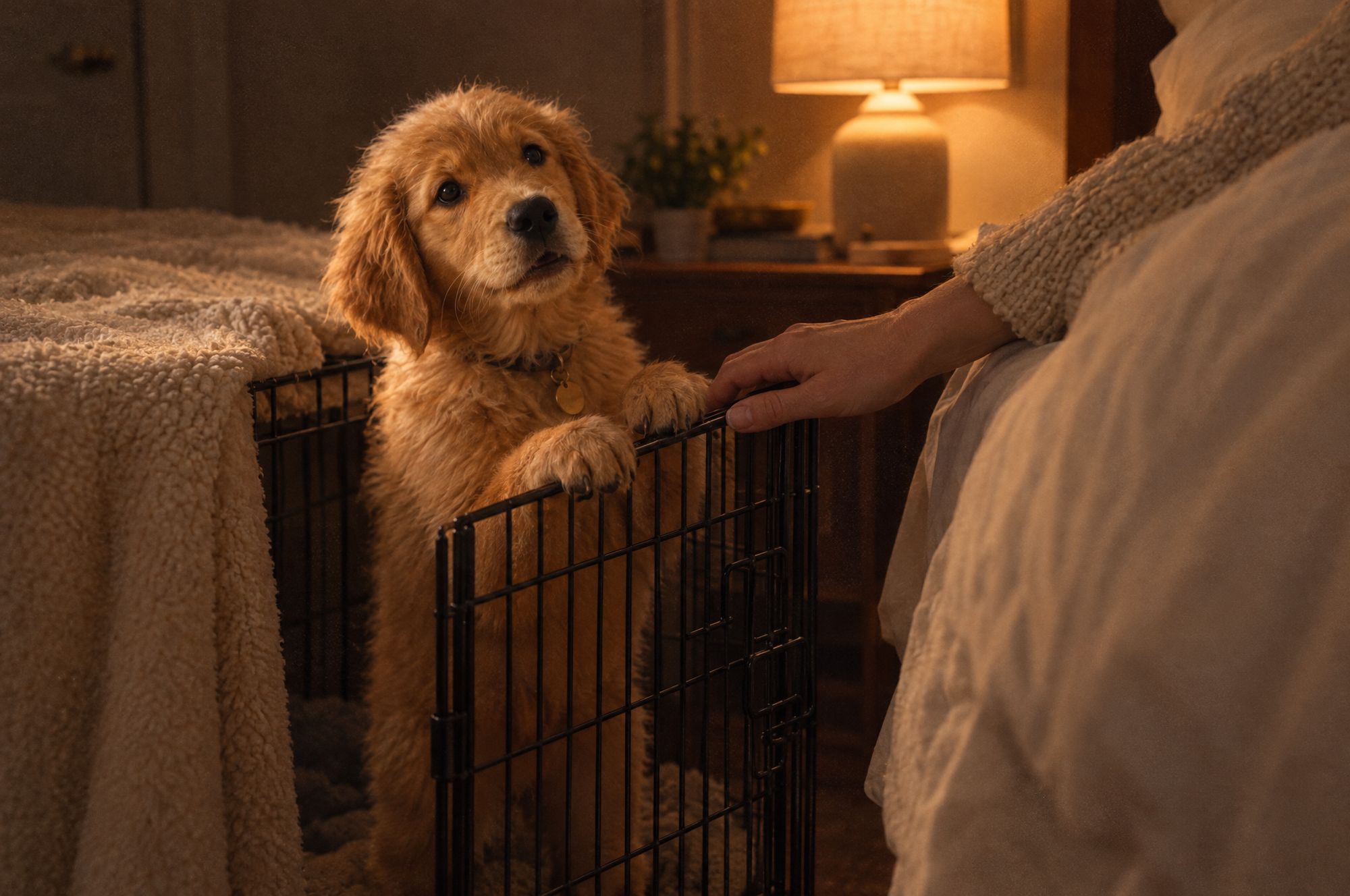
What to do tonight
Make bedtime boring and close.
- Set the sleep space beside your bed if you can.
- Offer a calm toilet chance, then go straight back to the sleep space.
- Keep the lights low, and keep play, food and cuddles to a minimum.
- When the crying starts, pause and listen before you respond.
When the crying starts, what is it saying?
Not every cry is the same. Match your answer to the need.
- If a toilet need is plausible
Take a boring toilet trip
- Go calmly and keep it strictly business.
- Back to the sleep space right after.
- No play, meal or long cuddle.
- If it's ordinary fussing after needs were met
Answer with small comfort
- Stay near with a small, quiet presence.
- Rest a hand near the barrier if it helps.
- Give them room to try settling, without a big event.
- If there's panic, or signs of illness or injury
Get help
- Get urgent vet advice for breathing trouble, collapse or injury.
- For panic, pause the crate plan and call a trainer or behavior professional.
Step 1
Make bedtime calm, close and predictable
Set up a small, puppy-safe sleep space beside your bed if you can. Use the crate only if it's safe and sized right for your puppy. If the crate itself is making things worse, a nearby pen or other safe sleep area is fine. Bring your puppy out for a calm toilet chance, then return straight to the sleep space. Keep lights low, and keep conversation, play, food and cuddling to a minimum.
Before you settle down, make a quick check. Has your puppy had a toilet chance, water and their usual meal, a little calm activity, and a chance to wind down? If not, meet the missing need first. A familiar blanket or a suitable, supervised comfort item can make the space feel less abrupt. Don't add loose bedding or a chew your puppy could shred or swallow unsupervised.
Step 2
What to do when the crying starts
Pause long enough to listen before responding. Ordinary protest often rises and falls, and a puppy may settle better when your response is quiet and predictable instead of a big event.
If a toilet need is plausible, take your puppy out calmly. Keep it strictly business: a toilet chance, then back to the sleep space. Don't turn the trip into late-night play, a meal or a long cuddle.
If their needs were just met and the sound is ordinary fussing, stay nearby and keep your response small. You can sit or sleep close to the crate, offer a quiet, reassuring presence, or briefly rest a hand near the barrier if that helps. Then give them room to try settling. Nobody is asking them to cry it out. The aim is to avoid teaching that every sound starts an exciting nighttime routine.
If the same pattern keeps happening, write down bedtime, toilet trips, meals and roughly when the crying begins. That small record makes tomorrow night less of a guess: you can adjust the pre-bed routine, plan a likely toilet trip, and practice short, calm crate rests during the day.
Step 3
Tomorrow, practice the crate by day
Build the sleep space into daytime life. Let your puppy find part of a normal meal or a safe food toy there, with the door open when possible. Reward calm resting, start with very short sessions while you're nearby, and add separation in small steps only while your puppy is coping. Keep the daily rhythm simple (potty, food, gentle activity, rest) instead of trying to tire out a stressed puppy with more excitement.
Step 4
When to change the plan
Pause the crate plan and get help from a qualified trainer or behavior professional if your puppy is escalating into panic: throwing themselves at the crate, trying to break teeth or claws on it, drooling heavily, or getting more distressed with no moments of recovery.
For tonight, use the safest arrangement that lets everyone sleep while you make a calmer daytime plan. You don't need to solve independence on a fixed timetable.
What a good night looks like
Silence on command isn't the goal
Success is meeting real needs, keeping the night uninteresting, noticing whether your puppy can recover between cries, and leaving yourself a clearer plan for the next sleep.
In the app
Get the full plan in Pawly.
In Pawly, this guide becomes one plan for your puppy, with a step for tonight and check-ins as you go.
Pawly is in beta on iPhone.
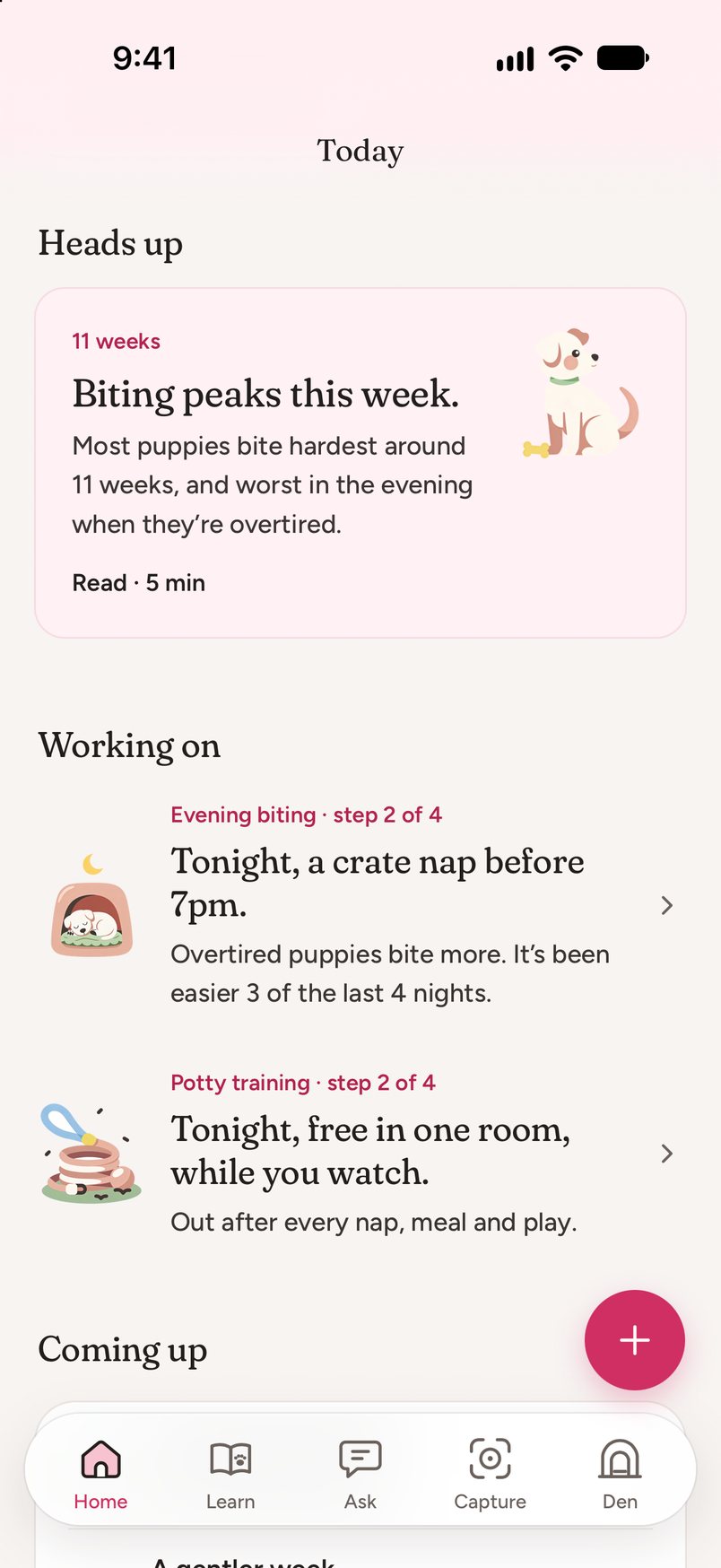
Plans on Pawly's Today screen.
Written from Pawly's research library. Safety lines are checked against published veterinary references. This guide isn't a diagnosis or a substitute for your vet.